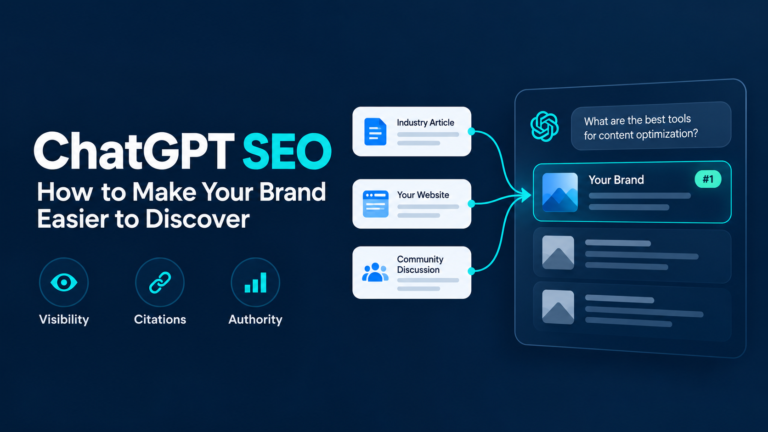
Before buying a secret AI Mode tactic, ask whether it is supported by Google guidance and a reproducible test.
CRESCENDO / PRACTICAL SEO FRAMEWORK
Testing Google AI Mode with discipline
An editorial decision framework, not a guaranteed ranking formula.
1
INDEXABILITY
Technical foundations
2
USEFUL ANSWERS
Credible task-focused pages
3
REPRODUCIBLE TESTS
Repeatable search experiments
4
BUSINESS IMPACT
Qualified enquiries
AI Mode changes the experience of searching: users can ask longer questions, explore follow-ups and encounter synthesized responses with supporting links. For marketers, that creates a new measurement problem. An impression, a cited link, a visit and a conversion are related events, but they are not interchangeable.
The right question is not “what trick makes AI Mode mention my brand?” It is “how can we make accurate, relevant information available—and what can we observe about the result?”
Start with what Google actually says
Google’s Search Central documentation explains that the same foundational SEO best practices are relevant to AI Overviews and AI Mode and that there are no additional technical requirements for appearing in these features. Supporting links require pages to be indexed and eligible for snippets. Eligibility does not guarantee inclusion. Google Search Central.
This rules out a lot of confident but unsupported advice. There is no officially required “AI Mode schema,” special file or universal prompt that forces citation.
1. Fix search eligibility first
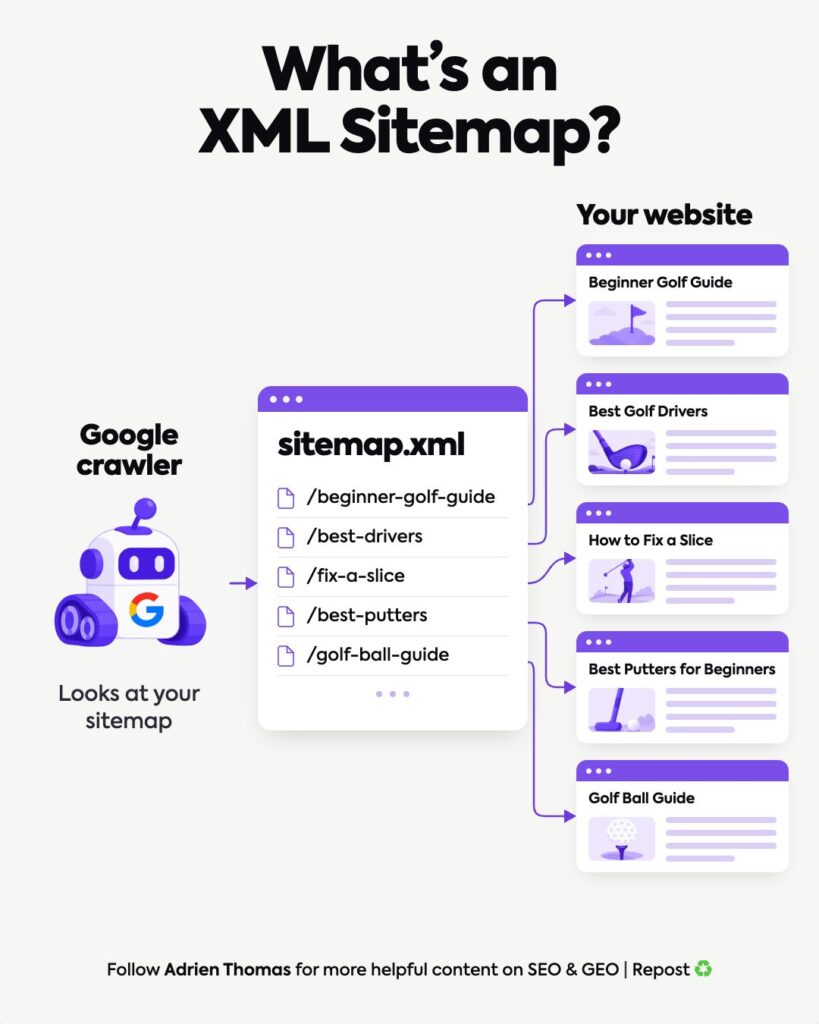
Review indexation, canonical URLs, page accessibility, crawlable links and snippet eligibility. Resolve broken or blocked pages before optimizing their wording. Check that service descriptions and important supporting pages are usable on mobile and not hidden behind inaccessible interfaces.
If a valuable answer cannot be crawled and indexed, stylistic adjustments are beside the point.
2. Answer complex buyer questions completely
AI-assisted searches often involve comparisons, qualifications and follow-up questions. Write for the complete decision rather than a single literal phrase: definitions, alternatives, criteria, constraints, implementation steps and examples. Ensure claims are sourced, particularly in financial, health or legal contexts.
Do not manufacture a separate thin landing page for each question variation. Google explicitly warns against scaled, low-value pages designed mainly to manipulate search results. Google guidance.
3. Make claims easy to check
When a page claims that an approach is faster or cheaper, supply the scope, baseline, method and date. Show sources, screenshots of processes, original datasets where rights allow, and named accountability for specialist content. Tables can help users compare options; they should not imply that Google prefers a particular cosmetic format.
4. Separate three different metrics
Search visibility: impressions, rankings and visits in Search Console. AI answer visibility: how often a brand or URL appears across a defined prompt set, tool and location. Business impact: qualified visits, leads and eventual pipeline. A rise in the first does not automatically prove an improvement in the others.
Google says AI features appear within Search Console’s Web search reporting rather than a universally separate AI Mode performance dataset. Your independent prompt monitoring needs its own methodology. Google documentation.
Crescendo’s reproducible AI Mode test protocol
Choose 20 real buyer questions spanning discovery, comparison and provider selection. Fix location, language, date, device where possible and repeat runs on a defined schedule. Record the exact query, answer text where permitted, links presented, cited domains, brand inclusion and the page’s business relevance. Do not combine data from different interfaces as if it were a single search-results ranking.
For each run, classify the outcome: brand named, website cited, competitor cited, no relevant link, or test not reproducible. Maintain the complete prompt list, not just favorable examples. This is an internal measurement framework, not an official Google metric.
The Crescendo Take: citations are not conversions
A brand mention can be valuable for awareness, but it is not a lead. A citation may send no visit, and a visit may not become pipeline. This is why we connect answer monitoring to audience research, analytics and revenue reporting wherever technically feasible. We also distinguish testing from evidence of causality.
Our position is deliberately unfashionable: if a service promises guaranteed AI Mode inclusion, ask for a clear definition of the claim and a reproducible method before paying for it.
For related experiments, establish verifiable organizational signals with our entity SEO and brand authority guide, identify unanswered buying questions through content gap analysis, and use SEO automation workflows to standardize recurring observations without overstating causality.
FAQ
Does llms.txt guarantee Google AI Mode visibility?
No. Google states that no additional special optimization is required for its AI features. Treat any claim of a universal guarantee with skepticism.
Can I track AI Mode separately in Search Console?
Google’s official reporting groups AI-feature performance within Web search data. Use a transparent external monitoring protocol for additional observations and do not confuse it with first-party Google data.
Should I write a page for every AI follow-up query?
No. Group related intents into genuinely useful resources. Search platforms reward helpful information, not mechanically generated query permutations.
Next step
Compare the technical foundation in GEO Audit Checklist with our methods for AI visibility monitoring, or request a focused assessment from Crescendo.