
Key Takeaways
- AI visibility measures how often your brand appears in AI answers, and the questions you appear on matter more than the overall score.
- “Best CRM for a $50M SaaS company replacing HubSpot” is worth far more than “What is CRM software?” Start with the 20 to 30 buying questions your customers ask before choosing a provider.
- An AI share of voice spread across thousands of prompts can hide how you do on those questions. AI answers also shift constantly: SparkToro found less than a 1 in 100 chance of getting the same list of brands twice.
- When a competitor wins a buying question, it usually has more proof. Muck Rack found that 84% of AI citations come from earned media.
- Build the evidence you’re missing, then track whether you start appearing.
AI visibility is how often your brand shows up when people ask ChatGPT, Gemini, Perplexity, or Google’s AI about your category. Most reports turn it into one number across thousands of prompts, and that number only means something once you know which questions it covers.
Showing up on the 20 questions buyers ask before choosing a provider is worth more than showing up on 10,000 questions from people who are just learning. Track fewer prompts, chosen by business value, and build the proof that gets you recommended.
What Is AI Visibility?
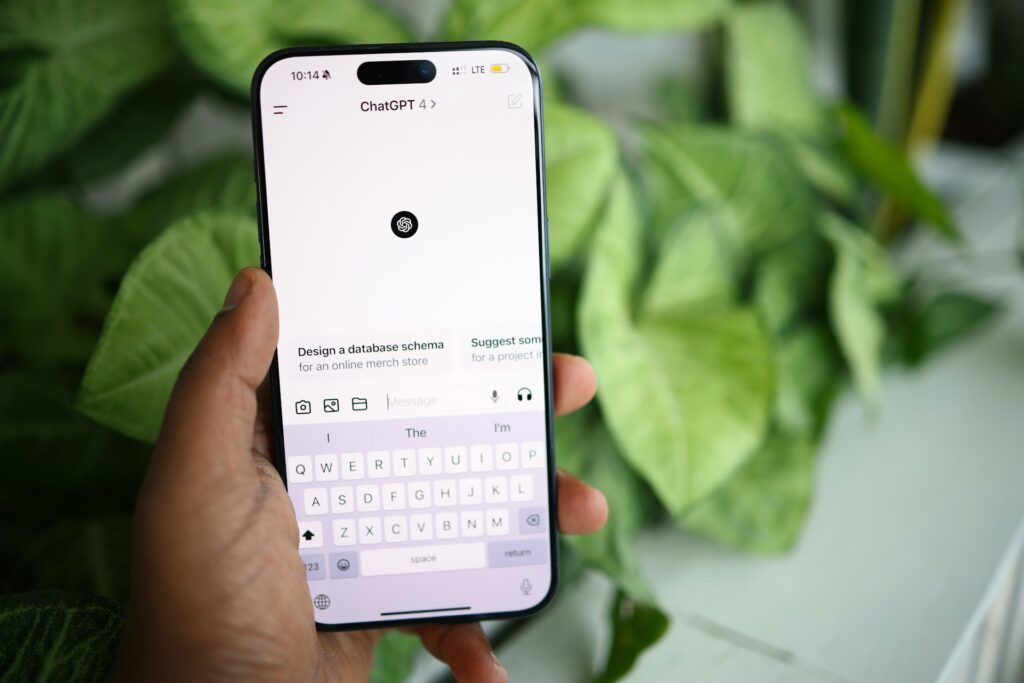
AI visibility is whether your brand appears in AI-generated answers, and what those answers say about you. In practice, it comes down to 4 questions:
- Do you show up when someone asks about your category?
- What does the AI say about you?
- Which competitors show up instead of you?
- Which sources does the AI cite?
Your brand can appear as a name in the answer, as a cited source, or both. Most AI visibility reports roll all of this into one percentage, so check which prompts sit behind it before you trust it.
Some AI Prompts Are Worth More Than Others
Compare these 2 prompts:
- “What is CRM software?”
- “What is the best CRM for a $50M SaaS company replacing HubSpot?”
The first person is learning about the category. The second might be choosing a vendor this week. Many AI visibility dashboards still count both the same way.
Romain, Crescendo’s co-founder, has 15 years of SEO behind him, and he compares this to Google Ads. You wouldn’t bid the same amount on “what is accounting” and “best accounting firm for international companies in Singapore,” and the same logic applies to prompts.
| Prompt type | Example | How close to buying | Tracking priority |
|---|---|---|---|
| Learning | “What is CRM software?” | Far: the person is still learning the category | Low |
| Comparing | “HubSpot vs. Salesforce for a small sales team” | Closer: they’re weighing options | Medium |
| Buying | “Best CRM for a $50M SaaS company replacing HubSpot” | Close: they may be choosing a vendor now | High |
For each prompt, ask 4 questions:
- Is this person learning, comparing, or buying?
- Do they match your ideal customer profile?
- What would this customer be worth to you?
- Do you have a strong offer for them?
People also give AI more detail than they type into a search bar. In May 2026, Google shared its first year of AI Mode data: the average AI Mode search is 3 times longer than a traditional search, and decision questions starting with “which” grew 40%. Longer questions carry more buying context, which makes it easier to spot the people who are ready to buy.
AI Share of Voice: 23% of What?
If your report says “your AI share of voice is 23%,” ask your agency or your tool a simple question: 23% of what?
Say the prompt list has 10,000 entries, mostly informational. 23% can look healthy while you’re missing from the 20 questions that bring customers. The reverse happens too. A low overall score can hide that you win the buying questions that matter.
The number also moves a lot from one run to the next. SparkToro ran 12 prompts through ChatGPT, Claude, and Google’s AI 2,961 times, with help from 600 volunteers (January 2026). There was less than a 1 in 100 chance of getting the same list of brands twice.
The same list in the same order came up less than 1 time in 1,000. SE Ranking’s research on AI Mode points the same way: only 35% of domains repeat in AI answers, and two-thirds vanish between runs.
So one run tells you little. A more reliable measure is how often your brand appears across repeated runs of the same prompt, and that’s far easier to do properly on 30 prompts than on 10,000.
Prompt Tracking: How to Find the Questions Worth Tracking
Prompt tracking means running the same set of questions through AI platforms on a schedule and recording who appears. Choosing the questions is the hard part. Start with your sales conversations, because they already contain the buying questions:
- What made the customer start looking?
- Which provider are they replacing, and why?
- Which features are must-haves?
- Which budget, location, or company size changes the recommendation?
“Best CRM” gives you almost no context. “Best CRM for a 50-person SaaS company replacing HubSpot, under $500 a month” describes a buying situation. Romain puts it this way:
“‘HubSpot alternatives’ under $500 a month? For 50 sales reps? With better reporting? These are different buying situations. AI lets customers describe their exact needs. Your strategy needs to reflect that.”
Romain, co-founder of Crescendo
As for how many prompts, SE Ranking’s guide suggests starting with 20 to 40, and quotes Kevin Indig’s baseline of 15 prompts per persona. Both land close to the 20 to 30 buying questions we start with at Crescendo. Use questions your actual customers ask. Inventing 500 variations makes the dashboard bigger without telling you more about your buyers.
When a Competitor Wins, Look for the Evidence Gap
Once you have your buying questions, check who AI recommends on each one, then work out why.
The brand AI recommends is usually the safer bet on paper, with relevant case studies and strong reviews. If all you have is a generic homepage and 2 testimonials, you have an evidence gap, and rewording your pages for prompts won’t close it.
Most of that evidence lives on other websites. Muck Rack’s May 2026 “What Is AI Reading?” report analyzed more than 25 million links cited by ChatGPT, Claude, and Gemini. Earned media, meaning coverage a brand didn’t pay for, made up 84% of citations. Paid and sponsored content made up 0.3%.
Ahrefs found a similar pattern for Google’s AI Overviews. In a study of 75,000 brands, branded web mentions had the strongest correlation with AI Overview visibility, at 0.664, against 0.218 for backlinks. A correlation doesn’t prove cause, but it points the same way as the Muck Rack data: what other websites say about you carries weight with AI.
Building the Evidence AI Needs to Recommend You
Build the proof around the customers you want to win:
- Customer case studies. One for each segment you want AI to recommend you for, with the company size, the problem, and the result.
- Third-party reviews. On the review platforms your buyers already check.
- Industry pages. A page for each industry you serve, written for that buyer’s situation.
- External mentions. Industry publications, comparison articles, podcasts, and partner websites.
- Clear documentation. Pricing, integrations, and features, written plainly enough that AI can quote them.
The goal is to make your company the obvious recommendation for that buying situation.
How to Improve Your AI Visibility in 5 Steps
- Identify your high-value buying questions.
- See who AI recommends on each one.
- Work out why those companies are winning.
- Build the missing evidence.
- Track whether you start appearing on those questions.
Steps 2 and 5 are the ones most companies skip. Doing AI prompt tracking by hand means running 30 prompts across several AI platforms every month, and that takes hours. That’s why we built Clairon.
It tracks your brand on those prompts across ChatGPT, Gemini, Claude, Perplexity, and AI Overviews, and shows which competitors appear instead of you and which sources the AI cites.
Start With 20 Questions From Your Last Sales Calls
“We would rather dominate 20 or 30 high-intent prompts than appear occasionally across 10,000 low-value ones.”
Adrien Thomas, co-founder of Crescendo
Pick 20 questions from your recent sales calls, check who AI recommends on each one, and let the gaps tell you what to build next. That’s the order we follow with clients at Crescendo: buying questions first, then the evidence behind them. If you want help finding your buying questions and closing the gaps, contact us at Crescendo.
FAQ
1. What is AI visibility?
It’s how often your brand appears in AI-generated answers on platforms like ChatGPT, Gemini, Perplexity, and Google’s AI Overviews, and what those answers say about you. The most useful version measures it on the questions buyers ask before choosing a provider.
2. How many prompts should you track?
Start with 20 to 30 buying questions. SE Ranking’s guide suggests 20 to 40. Add more only when a new prompt matches a real buying situation.
3. What’s wrong with AI share of voice?
It’s useful if you know what it measures. One percentage across thousands of mostly informational prompts can hide whether you appear on the questions that bring customers, and AI answers change from one run to the next.
4. What is prompt tracking?
Prompt tracking, or AI prompt tracking, means running the same questions through AI platforms on a regular schedule and recording whether your brand appears, which competitors show up, and which sources are cited. Since answers vary, measure how often you appear across repeated runs.
5. Why does AI recommend my competitor instead of me?
Usually because it has more evidence for that buying situation: case studies, reviews, documentation, and mentions on other websites. Muck Rack found that 84% of AI citations come from earned media.