
The problem with programmatic SEO is rarely the template. It is publishing pages without enough reason for each page to exist.
CRESCENDO / PRACTICAL SEO FRAMEWORK
The quality gate for programmatic SEO
An editorial decision framework, not a guaranteed ranking formula.
1
TRUSTED DATA
Verified inputs
2
DISTINCT INTENT
A separate user need
3
UNIQUE PAGE VALUE
Materially useful differences
4
HUMAN QA
Editorial checks before launch
Programmatic SEO creates pages from a repeatable structure and a dataset: locations, product configurations, services, integrations or comparisons. Done well, it helps people access information that would otherwise be difficult to find. Done badly, it produces thousands of near-identical pages that cannot answer the question better than a single article.
The distinction is not whether a human typed every word. Google describes scaled content abuse as generating many unoriginal, low-value pages primarily to manipulate search rankings, whatever method produced them. Google Search spam policies.
Begin with a real information problem
A programmatic page is justified when users need a reliably distinct answer. A technical directory might combine provider coverage, region, equipment specification, certifications and current service availability. A template that simply swaps “Chicago” for “Denver” without local evidence is far less defensible.
Start by writing the user question in plain English: “Which qualified providers service this equipment in this area?” or “Which integration supports this workflow and what are the limitations?” If the answer does not change meaningfully between records, one consolidated page may be better.
The five quality gates
Gate 1: Data rights and accuracy. Confirm where the dataset came from, how it can be used and when it was updated. Include ownership and a correction process.
Gate 2: Distinct user intent. Decide whether every generated URL answers an independently useful question. Group variants that are better answered together.
Gate 3: Non-template value. Each page must contain material facts that go beyond location names and generic adjectives: service coverage, actual specifications, verified data, constraints, examples or properly maintained comparisons.
Gate 4: Technical consistency. Use canonical URLs, crawlable navigation, clean internal links, correct structured data where eligible and sitemaps that reflect pages worth indexing.
Gate 5: Editorial oversight. Review representative samples before and after launch. Monitor duplicates, outdated records, inaccurate claims, complaints and organic landing-page quality.
Design a data schema before designing a page
For a service-provider directory, model fields such as entity ID, official name, approved service categories, region served, factual source URL, verification date and a correction route. Avoid pretending that a provider is independently certified, endorsed or personally tested when the source only confirms a basic listing.
If data is missing, say so or omit it. Filling gaps with AI-invented facts is not enrichment.
Use crawlable categories and a restrained index
Create a hierarchy that people can navigate. Index high-value combinations that supply a distinct answer, and handle low-value filters without creating uncontrolled URL combinations. Review canonical decisions carefully: Google treats canonicals as signals, not absolute directives. Google canonical guidance.
A practical 30-page pilot
Rather than launching 10,000 pages, test 30 representative pages across different data and intent conditions. Confirm their factual quality and review crawl/indexing behavior, rankings, engagement and relevant leads over an appropriate period. A small pilot does not prove a long-term ranking outcome, but it can expose broken data joins and template problems cheaply.
Document sample selection, QA failures and changes made before scale-up. If an analysis yields disappointing results, preserve them—they are precisely what a responsible pilot is for.
The Crescendo Programmatic Value Test
We ask four questions before approving any URL class: Is the question distinct? Is the dataset trustworthy? Is the answer useful without our sales pitch? Can a human correct mistakes? We do not publish classes that fail these checks simply because a keyword tool shows permutations.
This framework reflects our editorial approach. It is not an official Google certification, and passing it does not guarantee indexation or rankings.
The Crescendo Take: scale decisions, not pages
The most valuable part of a programmatic system is its rules for what not to publish. A page count is a production metric, not a quality metric. Sustainable scale comes from data integrity, restraint and ongoing verification.
FAQ
Is programmatic SEO against Google’s rules?
No single production technique is inherently disallowed. Google’s policies target manipulative scaled content that fails to provide genuine value.
Can AI write programmatic pages?
It can assist with formatting or summaries, but factual fields, distinct usefulness and editorial checks remain essential.
How many pages should I launch first?
Pilot a small, representative set. The right sample depends on record diversity, technical risk and the ability to review every class.
Next step
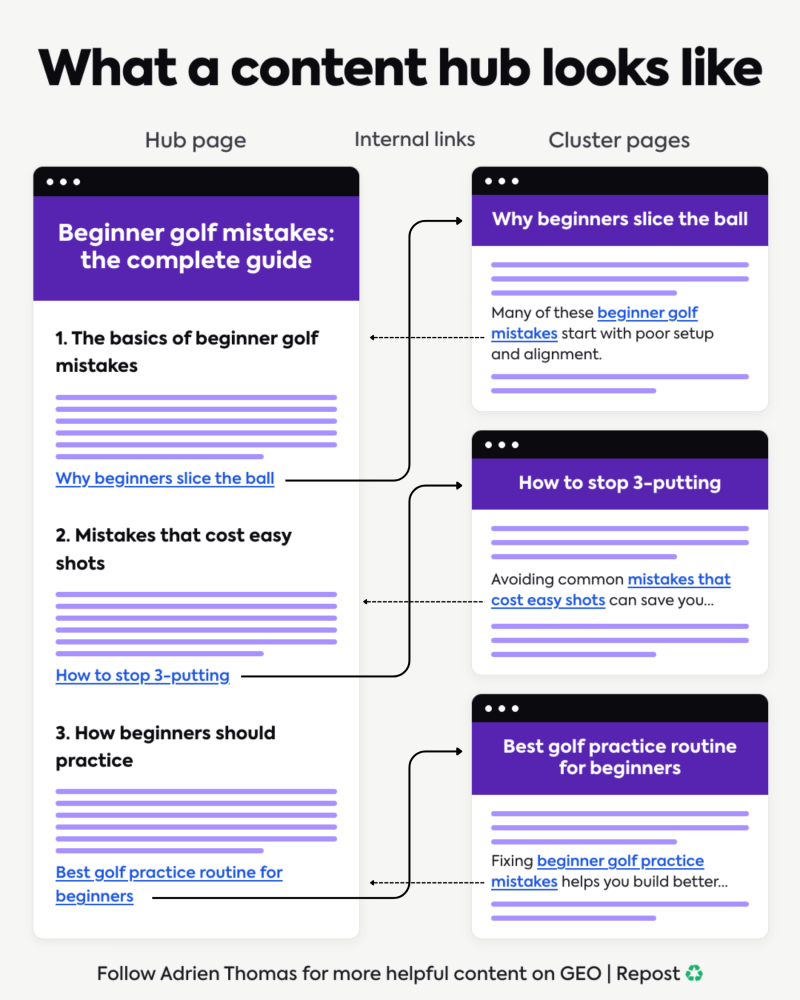
Read our guides to content hubs and XML sitemaps to plan crawlable structure. Crescendo can help test whether your dataset supports a legitimate search experience before you build at scale.